Rhythm Guitar Techniques: Strumming to Funk
Updated August 8, 2026
Knowing chords is essential, but rhythm guitar techniques are what make those chords come alive. They’re the difference between a flat, lifeless strum and a groove that makes people move. From the basic strumming patterns that underpin every genre to the percussive funk techniques that add rhythmic sophistication, these techniques define your sound and feel as a rhythm player.
This guide covers the techniques that matter most, organized from foundational to style-specific. For the full rhythm guitar picture, see our Ultimate Guide to Rhythm Guitar.
Strumming: The Foundation of Everything
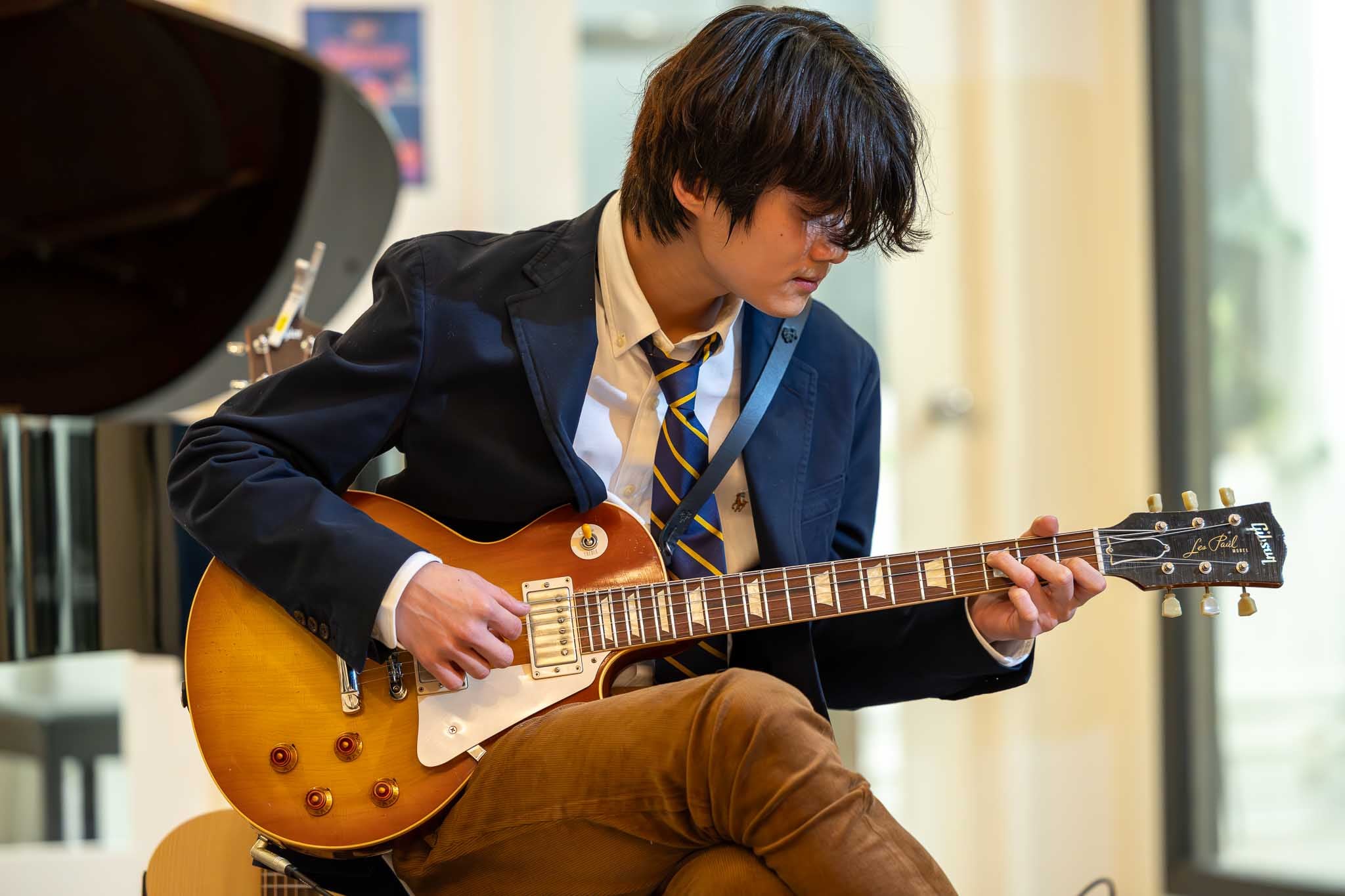
Strumming seems simple until you try to do it well. Effective strumming comes from a relaxed wrist motion, not a stiff arm swinging from the elbow. Your pick should glide across the strings rather than attacking them, and your wrist acts as a pendulum swinging in a continuous down-up motion matched to the subdivision of the song.
Control volume and tone through three variables: pick angle (tilted vs. flat against the strings), pressure (how firmly you grip and push through), and position (strumming near the bridge sounds brighter and tighter; strumming near the neck sounds warmer and fuller).
Common Strumming Mistakes
Stiff wrist: The most common issue. If your wrist isn’t loose, your strumming sounds rigid and mechanical. Practice the strumming motion without touching the strings. Just let your hand swing freely from the wrist.
Not Muting Strings: Another key mistake when strumming is not using your fretting hand to mute strings that you don’t want to have ring out. Strings that are unintentionally ringing out produce a muddy and unclean sound.
Overstrumming: Hitting all six strings on every strum when the chord only uses four or five. This produces muddy sound from unintended bass notes. Target only the strings that belong to the chord you’re playing.
Inconsistent dynamics: Every strum sounds the same volume. Great strumming has dynamic variation with louder accents on certain beats and softer strums in between. This creates groove and musical interest.
Changing Chords Efficiently
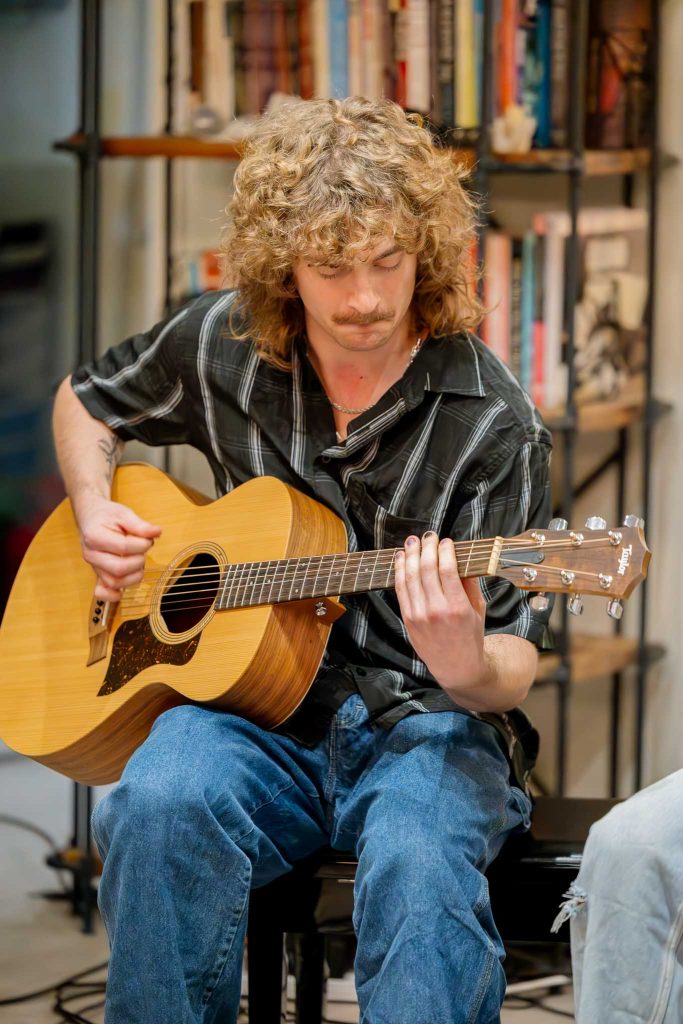
Technically not a “technique” in the traditional sense, but efficient chord changes are a skill that separates smooth players from choppy ones. The principles are straightforward:
Identify pivot points. When two chords share a finger in the same position (or close to it), keep that finger planted and move everything else around it. For example, switching from C to Am, your ring finger on the 3rd fret of the A string can stay planted.
Move as a unit. All fingers should arrive at the new chord simultaneously. Practice forming chord shapes in the air and placing them down as a complete shape rather than building the chord one finger at a time.
Anticipate. Start thinking about the next chord before you need to play it. Your brain needs a fraction of a second to prepare the shape. With practice, this anticipation becomes automatic as you’ll change chords without conscious thought.
Practice difficult transitions in isolation: loop between just two chords with a metronome until the change is effortless, then add it back into the full song context.
Palm Muting: Control and Texture
Palm muting is essential for any guitarist who plays rock, metal, country, or any style that requires dynamic control. Rest the fleshy edge of your picking hand on the strings near the bridge to dampen them, producing a tight, percussive sound.
The technique is straightforward, but the musicality comes from how you use it: alternating between muted and open passages creates dynamic contrast that makes rhythm parts come alive. Heavy palm muting during a verse followed by release into an open, ringing chorus is one of the most effective dynamics in rock. Pair it with power chords for the classic rock and metal rhythm sound.
Fingerpicking: Independence and Nuance
Fingerpicking replaces the pick with your individual fingers, opening up the ability to play multiple independent lines simultaneously. Your thumb handles the bass strings (E, A, D) while your index, middle, and ring fingers handle the treble strings (G, B, E).
The technique demands finger independence, where each finger must be able to move without affecting the others. This takes dedicated practice, but the payoff is enormous: fingerpicking lets you create arrangements that sound like a piano or multiple instruments playing at once.
If you also study piano, you’ll find that the finger independence skills transfer directly between instruments.
Essential fingerpicking songs: “Blackbird” by The Beatles, “Dust in the Wind” by Kansas, “Tears in Heaven” by Eric Clapton, “More Than Words” by Extreme, “Fast Car” by Tracy Chapman, “Stairway to Heaven” by Led Zeppelin, and “Nothing Else Matters” by Metallica. Each teaches a different aspect of fingerpicking technique while being deeply satisfying to play.

Ghost Notes: The Secret of Groove
Ghost notes (or dead notes) are percussive, muted sounds that add rhythmic texture without producing a specific pitch. They’re the rhythmic filler between louder chord hits that transforms a basic strum pattern into a groove.
To play ghost notes, press your fretting hand lightly against the strings. It should be enough to make contact, but not enough to fret actual notes. Then strum or pick normally. You’ll hear a short, muted “chick” sound that adds percussive rhythm to your playing.
Ghost notes are the foundation of funk rhythm guitar. Listen to any James Brown, Earth Wind & Fire, or Red Hot Chili Peppers track, and you’ll hear ghost notes weaving between the chord accents, creating the rhythmic complexity that makes funk irresistible.
Songs to practice ghost notes: “Smells Like Teen Spirit” by Nirvana, “Can’t Stop” by RHCP, “Play That Funky Music” by Wild Cherry, “Sex Machine” by James Brown, and “Creep” by Radiohead.
Hendrix-Style Triad Embellishments
This technique combines triads on the upper strings with hammer-ons and pull-offs to create rhythm parts that are melodic and dynamic. Rather than strumming static chord shapes, you’re adding color that makes each chord come alive and sound pianistic.
The approach: hold a triad shape on the D-G-B or G-B-E string sets and use your free finger(s) to embellish the chord with scale tones. You can also wrap your thumb around the neck for bass notes while your fingers handle the treble voicings.
This style, pioneered by Hendrix and refined by players like John Mayer and John Frusciante, is what separates functional chord playing from truly expressive rhythm guitar. “Little Wing,” “Castles Made of Sand,” “Slow Dancing in a Burning Room,” and “Under the Bridge” are essential study pieces.
Fast Downpicking (Metal/Punk)
For metal and punk guitarists, fast downpicking is a non-negotiable skill. Using only downstrokes at rapid tempos creates a powerful, rhythmically tight attack that alternate picking can’t replicate. The consistent downstroke direction produces uniform pick attack and aggressive tone.
The motion comes from the wrist with small, controlled movements with a relaxed arm. Gripping the pick too tightly or using large arm movements limits both speed and endurance. The goal is efficiency: minimum motion, maximum impact.
James Hetfield of Metallica is the benchmark for fast downpicking. Songs like “Master of Puppets” and “Creeping Death” demand sustained downpicking at fast tempos for minutes at a time. Build toward this gradually with a metronome by starting at 60-70% of the target tempo and then increasing by 5 BPM only when the current tempo feels effortless.
Putting Techniques Together
The most musical rhythm guitarists don’t use these techniques in isolation. Instead, they blend them fluidly within songs and even within individual phrases. A verse might use palm-muted power chords, a pre-chorus might switch to ghost-note driven open chords, and a chorus might open up to full strumming with dynamic accents. A bridge could drop to fingerpicked arpeggios before building back to full power.
This dynamic range, the ability to shift between textures and techniques as the music demands, is what makes a rhythm guitarist indispensable. It’s also the skill that develops fastest when you play with other musicians, because you learn to respond to what the song and the moment require rather than playing one way through everything.
If you’re ready to develop your rhythm guitar techniques with expert guidance, our guitar lessons at Musicians Playground cover everything from basic strumming to advanced funk techniques. Our working Boston musicians tailor each lesson to your goals and musical interests, ensuring that technique development is always connected to the music you want to play. Our BAND+ program is where these techniques come alive in a band context. Visit our complete guide to guitar lessons in Boston to get started.
Frequently Asked Questions
What is the most important rhythm guitar technique to learn first?
Strumming with good timing. Everything else builds on the ability to strum chords in time with a steady rhythm. Master basic strumming patterns with a metronome before adding techniques like palm muting, ghost notes, or fingerpicking.
How do I make my strumming sound more interesting?
Add dynamic variation (louder accents on beats 2 and 4), incorporate ghost notes between chord hits, and use palm muting for contrast. Even a simple two-chord progression sounds compelling when played with rhythmic variety and dynamic range.
Is fingerpicking harder than using a pick?
It’s different, rather than harder. Fingerpicking requires developing finger independence that takes dedicated practice, while pick playing requires developing wrist fluency and pick control. Most guitarists benefit from learning both, as they open up different musical possibilities.
Do I need to learn funk guitar techniques if I don’t play funk?
Funk techniques, particularly ghost notes and syncopated strumming, improve your rhythmic awareness and groove in every genre. A rock or pop guitarist who can incorporate subtle ghost notes and dynamic accents sounds significantly more professional than one who can’t. Funk technique is really a rhythm technique at its highest level.