Guitar Modes Explained for Adult Learners
Updated August 8, 2026
Modes are one of those topics that makes guitarists’ eyes glaze over. You’ve probably seen diagrams with seven different scale shapes and names like Phrygian and Locrian and thought, “I’ll get to that eventually.” Or maybe you’ve read explanations that technically made sense but didn’t help you understand why modes matter or how to actually use them in your playing.
This guide takes a different approach. Instead of starting with theory, we’ll start with sound. Because guitar modes explained through your ears will stick with you far longer than modes explained through diagrams alone. This is the approach our instructors use with adult students at Musicians Playground, and it consistently turns confusion into clarity.
For how modes fit into the bigger picture of lead guitar, see our Ultimate Guide to Lead Guitar.

What Modes Actually Are (Without the Jargon)
You already know two modes, even if you don’t realize it. The major scale? That’s the Ionian mode. The natural minor scale? That’s the Aeolian mode. You’ve been playing modes this entire time.
Here’s the concept in its simplest form: take the C major scale (C, D, E, F, G, A, B). Now play those exact same notes, but start on D instead of C. You get D, E, F, G, A, B, C. Same notes, different starting point, and it sounds completely different. That’s D Dorian. Start on E and you get E Phrygian. Start on F and you get F Lydian. Each starting point creates a different mood because the intervals between notes shift.
There are seven modes total, one starting on each note of the major scale. Each one has a distinct emotional character that expands your soloing vocabulary beyond simply “happy” (major) and “sad” (minor).
The Seven Modes at a Glance
Rather than memorizing formulas first, listen for the character of each mode. That emotional quality is what makes modes useful in practice.
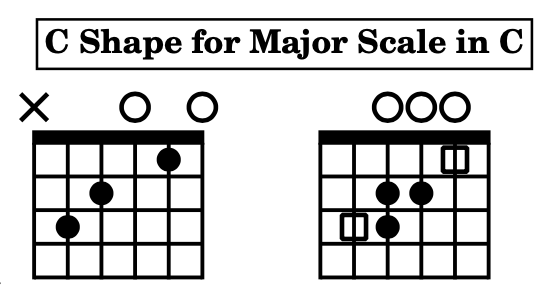
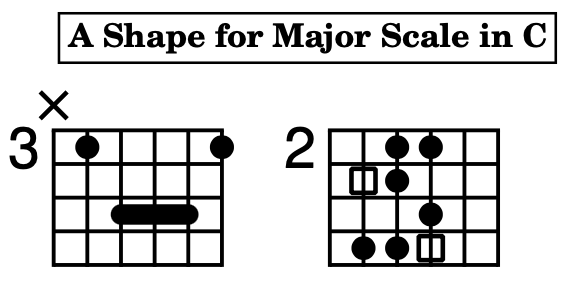
Ionian (starts on the 1st degree): This is your standard major scale. Bright, happy, resolved. You already know this one. Notes: 1, 2, 3, 4, 5, 6, 7. Below are the CAGED and 3 note per string (3NPS) shapes for C Ionian


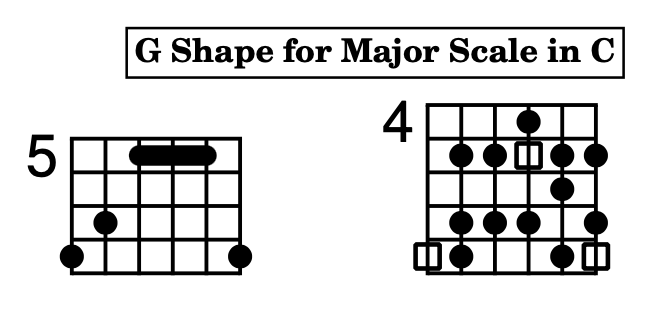

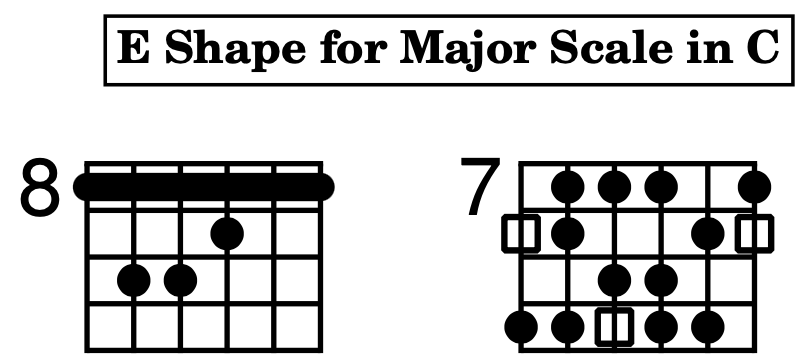

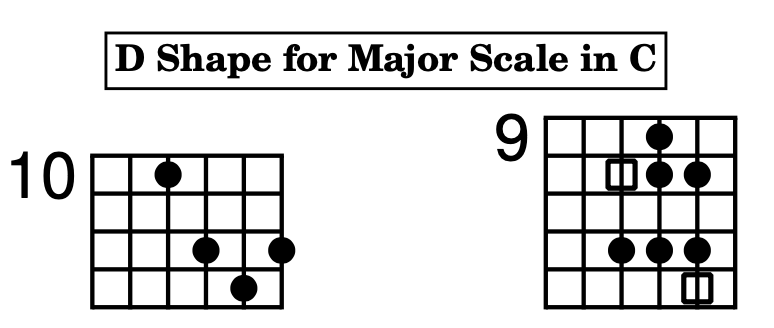

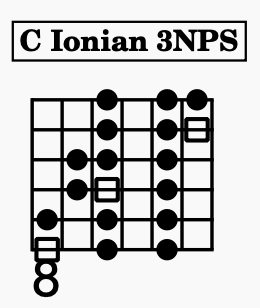

Dorian (starts on the 2nd degree): Minor with a groove. Brighter and funkier than the natural minor because of its natural 6th degree. Think smooth jazz, funk, and classic rock. Notes: 1, 2, ♭3, 4, 5, 6, ♭7. Below is how to play the D Dorian mode:
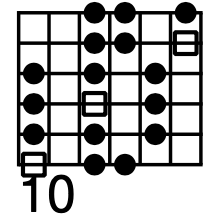

Phrygian (starts on the 3rd degree): Dark, exotic, aggressive. The ♭2 gives it a sinister edge that’s perfect for metal and Spanish-influenced music. Notes: 1, ♭2, ♭3, 4, 5, ♭6, ♭7. Below is how to play E Phrygian:
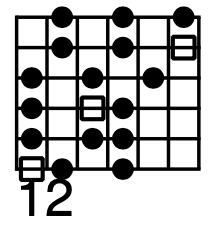

Lydian (starts on the 4th degree): Dreamy, ethereal, floating. The #4 makes it the brightest of all modes. Common in film scores and instrumental rock. Notes: 1, 2, 3, #4, 5, 6, 7. Below is how to play F Lydian:
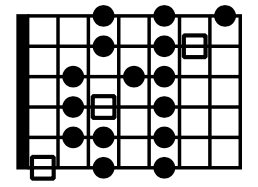

Mixolydian (starts on the 5th degree): Major with a blues edge. The ♭7 gives it a laid-back, rootsy quality. The backbone of classic rock, country, and blues-rock. Notes: 1, 2, 3, 4, 5, 6, ♭7.
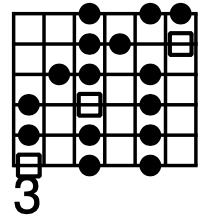

Aeolian (starts on the 6th degree): This is your natural minor scale. Sad, serious, introspective. The default “minor” sound. Notes: 1, 2, ♭3, 4, 5, ♭6, ♭7.
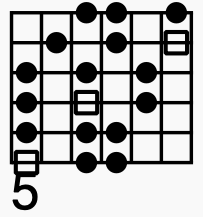

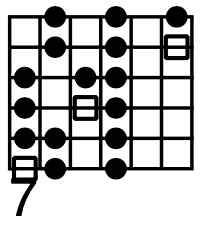
Locrian (starts on the 7th degree): Unstable and dissonant. The ♭5 makes it the darkest mode and the hardest to use musically. Primarily appears in metal for creating tension. Notes: 1, ♭2, ♭3, 4, ♭5, ♭6, ♭7. Below is how to play B Locrian

The Two Modes You Should Learn First
Don’t try to learn all seven modes at once. Start with the two that are most useful and most distinct from the major and minor scales you already know.
Dorian: The Groovy Minor Mode
Dorian is the most versatile mode after the standard major and minor scales. It’s minor (has a ♭3), but the natural 6th degree gives it a warmer, funkier quality than the Aeolian mode. When you play natural minor, and something feels too dark or heavy for the musical context, Dorian is often the answer.
Where you’ve heard it: “Oye Como Va” by Santana, “Uptown Funk” by Bruno Mars, “Breathe in the Air” by Pink Floyd, and countless jazz and funk songs. Dorian is everywhere in popular music once you start listening for it.
How to practice it: Play the D Dorian mode (D, E, F, G, A, B, C) over a D minor vamp or backing track. Compare how it sounds to D natural minor (which would use B♭ instead of B). That one note difference, the natural 6th, is what gives Dorian its distinctive character. Once you hear the difference, you’ll start recognizing Dorian in songs you’ve listened to for years.
Practical application: Any time you’re soloing over a minor chord progression and want a sound that’s less dark and more sophisticated than straight minor pentatonic, try Dorian. It works especially well over funk, soul, and groove-based music.
Mixolydian: The Rock and Blues Mode
Mixolydian is arguably the most important mode for rock guitarists after the standard pentatonic scales. It’s major (has a natural 3rd), but the ♭7 gives it a gritty, bluesy edge that’s less “bright and happy” and more “confident and swaggering.”
Where you’ve heard it: “Sweet Child O’ Mine” by Guns N’ Roses, “Sweet Home Alabama” by Lynyrd Skynyrd, “Hey Jude” by The Beatles, and much of The Allman Brothers’ catalog. Mixolydian is the sound of classic rock.
How to practice it: Play the G Mixolydian mode (G, A, B, C, D, E, F) over a G major or G dominant 7th backing track. Compare it to G Ionian (which would use F# instead of F). The ♭7 adds a relaxed, bluesy quality that fits rock perfectly.
Practical application: Mixolydian works over dominant 7th chords and any major chord progression where you want a bluesier, less “polished” sound. It’s particularly effective over classic rock, Southern rock, and blues-rock progressions.
How Modes Actually Work in Practice

Here’s where many mode explanations fail: they explain the theory but not the practical application. Understanding guitar modes explained conceptually is one thing. Using them while soloing is another. Here’s how to bridge that gap.
Think in terms of “characteristic notes.” Each mode has one or two notes that distinguish it from the standard major or minor scale. Dorian’s characteristic note is the natural 6th. Mixolydian’s is the ♭7. Phrygian’s is the ♭2. When you want a mode’s flavor, emphasize its characteristic note. You don’t have to play the entire mode scale up and down, just target that one special note within your existing pentatonic or scale framework.
Use modes as spice, not a complete replacement. You don’t need to “play in Dorian” for an entire solo. You can play primarily from the minor pentatonic and incorporate the Dorian natural 6th when you want that specific color. Modes are additional tools in your toolkit, not entirely separate systems.
Let your ear guide you. Play over a backing track and experiment with the characteristic notes of different modes. Your ear will tell you immediately whether a note sounds right in context. This is faster and more musical than trying to analyze which mode “should” work theoretically.
Modes You Already Know from Songs
One of the best ways to internalize modes is to recognize them in music you already love. Here’s a listening guide that connects modal sounds to familiar songs:
Dorian examples: “Breathe in the Air” by Pink Floyd, “I Wish” by Stevie Wonder, and “Good Times” by Chic.
Lydian examples: “Dreams” by Fleetwood Mac, “Flying in a Blue Dream” by Joe Satriani, and “Oceans” by Pearl Jam
Phrygian examples: “Wherever I May Roam” by Metallica, “Symphony of Destruction” by Megadeth, “Set the Controls for the Heart of the Sun” by Pink Floyd
Mixolydian examples: “Norwegian Wood” by The Beatles, “Clocks” by Coldplay, and “Won’t Get Fooled Again” by The Who.
Listen to these tracks and focus on the emotional quality. Then play the corresponding mode over a backing track. When you connect the sound to music you already know, the mode stops being an abstract concept and becomes a recognizable color.
Common Mode Misconceptions
“I need to learn all seven modes before I can use any of them.” False. Learning Dorian and Mixolydian gives you an enormous range. Add Lydian and Phrygian later if your musical interests call for them. Most working guitarists primarily use 3-4 modes in their regular playing.
“Modes are just scales starting on different notes.” Technically true, but misleading. Playing C major starting on D doesn’t automatically make it “Dorian.” Dorian happens when D is the tonal center, or to put it another way, when the music resolves to D. Context matters more than note content.
“Modes are only for jazz and advanced players.” Modes appear in pop, rock, metal, funk, country, and film music constantly. You’ve been hearing modal music your entire life. Learning to identify and use modes simply gives you conscious access to colors you’ve always responded to intuitively.
“I need to learn new shapes for each mode.” Since modes are derived from the major scale, the shapes you already know for the major scale contain all seven modes. The shift is in which note you treat as “home,” not in learning entirely new fingering patterns. If you already know the major scale through the CAGED system, you already have all the shapes you need.

A Practical Practice Plan for Modes
Here’s how to integrate modes into your existing practice routine without feeling overwhelmed:
Week 1-2: Dorian awareness. Play the minor pentatonic over a minor backing track as usual. Then, start adding the natural 6th (the Dorian note) to your lines. Notice how it changes the mood. Don’t overthink it, just experiment and listen.
Week 3-4: Mixolydian awareness. Same approach over a major or dominant 7th backing track. Play major pentatonic as your base, then incorporate the ♭7. Listen to how it adds a bluesy, rock quality.
Month 2: Ear training. Listen to the songs listed above and identify the modal moments. Try to replicate those sounds over backing tracks. This connects your theoretical knowledge to a real musical context.
Month 3+: Integration. Practice switching between modes within a solo. Over a chord progression that moves between major and minor chords, use Mixolydian over the major chords and Dorian over the minor chords. This is where modes become a truly powerful improvisational tool.
If modes still feel abstract after working through this on your own, guided instruction can make the difference. At Musicians Playground, our instructors break down modes using the music you actually listen to. They’ll identify which modes appear in your favorite songs and help you apply those sounds in your own playing. It’s the fastest way to make modes click. Visit our complete guide to guitar lessons in Boston to learn more, or explore how modes come alive in a band setting through our BAND+ program.
Frequently Asked Questions
What is the easiest guitar mode to learn first?
Dorian is the easiest mode to learn first because it’s closely related to the natural minor scale you likely already know. The only difference is one note (the natural 6th instead of ♭6), so you’re adding a single new note to a familiar framework rather than learning something entirely new.
Do I need to know modes to be a good guitarist?
No. Many excellent guitarists play primarily from pentatonic and major/minor scales without consciously thinking about modes. However, understanding modes gives you more colors to work with and helps you identify why certain musical moments sound the way they do. They’re not required, but they’re enriching.
How are modes different from scales?
Modes are scales, specifically, they’re the seven scales that can be derived from the major scale by starting on each of its seven notes. The practical difference is that each mode has a unique emotional character determined by its specific pattern of intervals. “Scales” is the broader category; “modes” refers to this specific family of seven related scales.
Can I use modes with the pentatonic scale?
Absolutely, and this is the most practical way to apply modes. Use the pentatonic scale as your foundation and add the characteristic note(s) of whichever mode you want to evoke. For example, adding the natural 6th to the minor pentatonic gives you a Dorian flavor without requiring you to think about the full seven-note mode shape.