
Lead Guitar for Beginners: Where to Start
Updated August 8, 2026
You’ve been playing chords for a while now. Maybe you can strum through your favorite songs, switch between open chords without thinking, and even hold your own at an open mic. But something is missing. You hear a solo cut through a song and think, “I want to do that.” If that sounds familiar, you’re ready to explore lead guitar for beginners.
The good news? Lead guitar isn’t just for teenagers with twelve hours a day to practice. In fact, adult learners often progress faster because they bring musical taste, patience, and real listening skills to the table. Whether you’re a working professional in Boston looking for a creative outlet or someone who picked up guitar later in life, this guide will show you exactly where to start.

For a deeper dive into every concept covered here, check out our Ultimate Guide to Lead Guitar, the comprehensive resource our working Boston musicians put together for students at every level.
What Is Lead Guitar, Really?
Lead guitar is the part of guitar playing focused on melodies, solos, and improvisation. While rhythm guitar handles chords and the harmonic foundation, lead guitar sits on top of that foundation and tells a story through single-note lines, expressive bends, and dynamic phrasing.
Here’s what surprises most beginners: lead guitar is not about playing fast. Some of the most celebrated guitarists in history, such as David Gilmour and B.B. King, are known for saying more with fewer notes. Speed is a tool, not the goal. Expression is the goal.
Think of lead guitar like speaking. A great speaker doesn’t talk as fast as possible. They pause for effect. They emphasize the right words. They know when silence says more than another sentence. That’s exactly how great lead guitarists approach soloing.
The Foundations Every Beginner Needs First
Before you learn a single scale or technique, there are foundational skills that will determine how musical your lead playing sounds. Skipping these is the most common mistake beginners make, and it’s why so many solos sound like exercises rather than music.
Great lead guitar for beginners starts with rhythm. That might sound contradictory, but even the most beautiful melodic idea falls flat if it rushes or drags against the beat. Strong lead players place their notes intentionally, using space and silence as deliberately as they use sound.
Timing and Phrasing
Phrasing is essentially how you organize your musical sentences. Good phrasing involves call and response (playing a musical question and then answering it), repetition with variation, and knowing when to leave space. Practice playing along with backing tracks and focus on landing your notes right on the beat before worrying about what notes you’re playing.
Fretboard Awareness
You don’t need to memorize every note on the fretboard overnight. But you do need to develop a sense of orientation, knowing roughly where you are and how shapes connect across the neck. This awareness builds naturally over time, especially when you practice scales in different positions rather than staying locked in one spot.
Hand Synchronization
Your fretting hand and picking hand need to work as a coordinated unit. When they’re out of sync, even simple lines sound sloppy and unclear. The fix is straightforward: practice slowly with a metronome. If you can play something cleanly at a slow tempo, speed will come naturally. If you can’t play it cleanly slow, playing it fast will only make it worse.

Your First Scale: The Minor Pentatonic
Of all the guitar scales you’ll eventually learn, the minor pentatonic is where every lead guitarist should begin. It’s a five-note scale that sounds great over blues, rock, pop, and funk. Countless iconic solos are built almost entirely from this one scale.
The minor pentatonic contains the notes 1, ♭3, 4, 5, and ♭7. In the key of A minor, that translates to A, C, D, E, and G. As seen below, the first position (starting at the 5th fret) is the most common shape and should be the first one you memorize. Learn the other positions later.
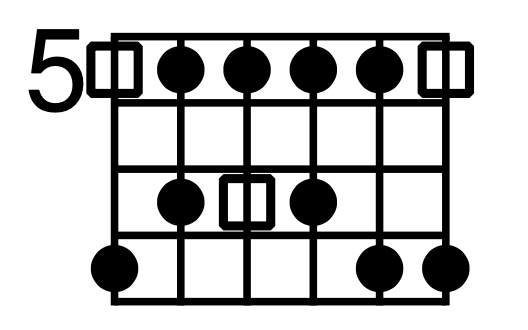

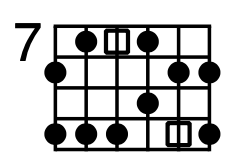

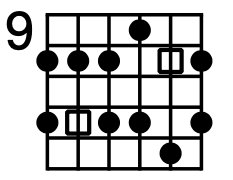

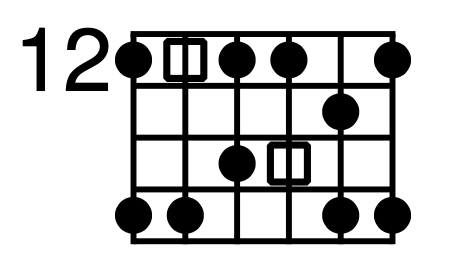

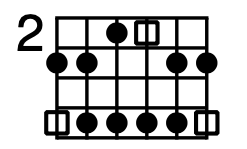

Here’s how to practice it effectively as a beginner:
Week 1-2: Learn the shape ascending and descending. Play it slowly with a metronome at 60-70 BPM. Focus on clean, even notes with no buzzing or muted strings.
Week 3-4: Play along with a backing track in A minor. Don’t worry about playing anything impressive, just get comfortable navigating the shape while music is happening around you. Experiment with playing just 2-3 notes and leaving space between them.
Month 2: Start learning the second position of the pentatonic scale and practice connecting the two shapes. This is where fretboard awareness really begins to develop.
Three Techniques to Learn Right Away
Once you have the minor pentatonic under your fingers, these three essential guitar techniques will transform your playing from a sequence of individual notes into something that actually sounds like music.
Slides
A slide connects two notes smoothly by maintaining finger pressure while moving along the string. It’s the easiest technique to learn and immediately makes your playing sound more fluid and connected. To practice, pick any two frets within your pentatonic scale and slide between them. Focus on maintaining even pressure throughout the motion so the note sustains cleanly.
The most common beginner mistake with slides happens when sliding down to a lower fret. You need to land right at the edge of the target fret closest to where you came from. Overshooting kills the note instantly.
Hammer-Ons
A hammer-on lets you play a second note without picking again. You fret and pick a note, then firmly strike a higher fret with another finger. The key word is “firmly.” A timid hammer-on produces a weak, barely audible note. Practice each finger individually so you can execute hammer-ons with any combination.
Start by hammering on between adjacent notes in the pentatonic scale. Once that feels natural, try combining slides and hammer-ons in short phrases.
Pull-Offs
A pull-off is the reverse of a hammer-on. You fret two notes, pick the higher one, then pull that finger off the string with a slight plucking motion to sound the lower note. The pulling motion is what gives the second note its volume. Simply lifting your finger won’t produce enough sound.
Together, hammer-ons and pull-offs form the basis of legato playing, which is one of the most expressive and fluid approaches to lead guitar. They also reduce picking fatigue, making it easier to play longer phrases smoothly.
Beginner Solos to Start Learning
Theory and technique are essential, but nothing replaces learning actual music. These solos use the pentatonic scale and basic techniques covered above, making them perfect starting points for lead guitar beginners:
“Seven Nation Army” by The White Stripes: Although it’s based on the main riff, it’s a perfect first lead line. Simple, rhythmic, and incredibly satisfying to play.
“Hey Joe” by Jimi Hendrix: A great introduction to using the pentatonic scale expressively with slides and bends.
“Let It Be” by The Beatles: A melodic solo built almost entirely from the pentatonic scale with some beautiful bends. It teaches you about phrasing and space.
“Comfortably Numb” (1st Solo) by Pink Floyd: David Gilmour’s masterclass in phrasing. Every note has a purpose, and it’s surprisingly approachable for a beginner working through it slowly.
“Nothing Else Matters” by Metallica: It’s a great introduction to playing with emotional expression.

Common Mistakes Beginners Make
After years of teaching lead guitar for beginners at our Boston guitar lessons studio, our instructors see the same patterns repeatedly. Avoiding these mistakes early will save you months of frustration:
Practicing too fast. Speed is a byproduct of clean technique, not a goal in itself. If you can’t play a phrase perfectly at 60 BPM, don’t try it at 200. Your muscle memory doesn’t know the difference between “fast and sloppy” and “correct.” It just memorizes whatever you repeat.
Ignoring rhythm. Many beginners focus entirely on which notes to play and completely neglect when to play them. A perfectly chosen note played at the wrong time sounds like a mistake. A simple note played with perfect timing sounds intentional.
Never playing with other musicians. Lead guitar exists in the context of a band. Practicing alone is necessary, but you’ll develop faster when you play with others. That’s one reason our BAND+ program has been so effective for intermediate guitar students looking to take their soloing to the next level.
Skipping the basics. It’s tempting to jump straight to advanced techniques like sweep picking or tapping. But without solid fundamentals, timing, pentatonic fluency, clean hammer-ons and pull-offs, advanced techniques will sound messy and uncontrolled.
Next Steps: Building on Your Foundation
Once you’re comfortable with the minor pentatonic scale and the three basic techniques above, your next moves should be:
Learn the blues scale. It adds just one note to the minor pentatonic (the ♭5, or “blue note”) and dramatically expands your tonal palette. Our complete scales guide walks you through it step by step.
Add bending and vibrato. These two techniques are what separate a guitarist who knows scales from a guitarist who sounds like a musician. They’re how you develop your own voice on the instrument.
Learn more pentatonic positions. Knowing all five positions across the fretboard opens up the entire neck and gives you the freedom to solo anywhere, not just in one box shape.
If you’re an adult learner in Boston ready to accelerate your lead guitar journey, our guitar lessons are designed specifically for working professionals. Our working Boston musicians specialize in helping adult students build real skills in a supportive, no-pressure environment. It’s never too late to become the guitarist you’ve always wanted to be.
Frequently Asked Questions
How long does it take to learn lead guitar as a beginner?
Most adult students can play simple solos within 2-3 months of focused practice. Developing confident improvisation typically takes 6-12 months. Consistency matters more than duration, practicing 20 minutes daily beats a 3-hour weekend session.
Do I need to learn rhythm guitar before lead guitar?
Having basic chord knowledge helps, but you don’t need to master rhythm guitar first. Many students work on both simultaneously. Understanding chords will actually improve your lead playing because you’ll know what notes fit over different progressions.
Can I learn lead guitar as an adult with no experience?
Absolutely. Adult learners bring advantages that younger students often lack, including musical taste from years of listening, patience for deliberate practice, and the discipline to follow a structured learning plan. Many of our most accomplished guitar students at Musicians Playground in Boston started as complete beginners in their 30s, 40s, and beyond.
What guitar do I need for lead guitar?
Any electric guitar works for learning lead. If you’re just starting out, a guitar with a comfortable neck and low action (string height) will make techniques like hammer-ons and bends significantly easier. Your instructor can help you evaluate your setup during your first lesson.