The Science of Music and Teamwork: Why Bands Build Better Teams
Updated August 10, 2026
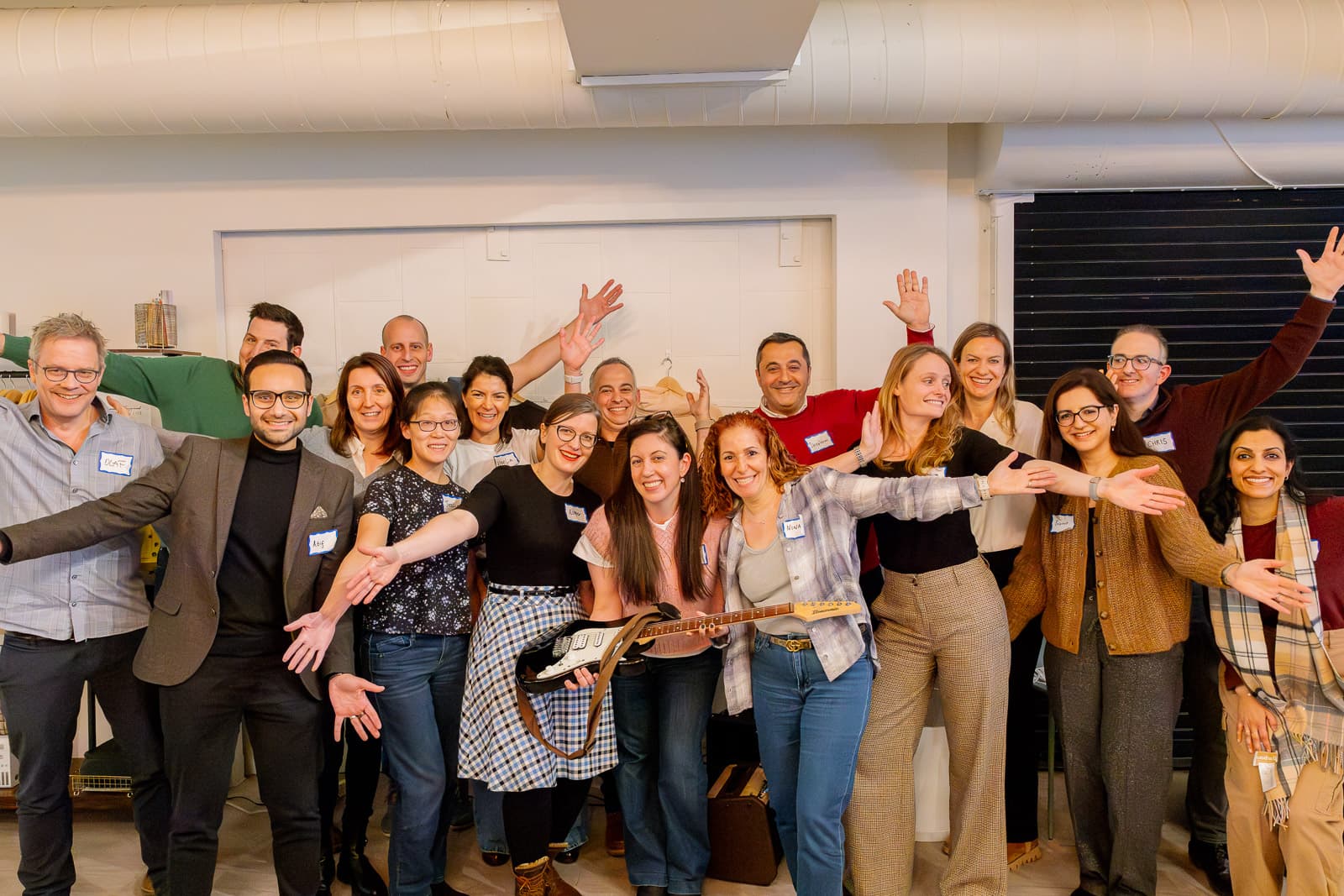
Every HR leader has heard the promise: “This team building activity will transform your team.” Most of the time, it doesn’t. The research on traditional team building activities, trust falls, ropes courses, trivia nights, shows that their effects on team performance are modest and short-lived. But there’s one category of team building that consistently outperforms the rest in peer-reviewed research: music and teamwork. The science behind why playing music together builds stronger teams isn’t just compelling, it’s changing how the most thoughtful companies approach corporate events.
This article examines the research behind music-based team building, explains the neurological and psychological mechanisms at work, and shows why the principles that make a great band also make a great team. For a broader overview of your options, see our complete guide to team building activities in Boston.
Synchrony: The Foundation of Group Bonding
The most important concept in the science of music and teamwork is synchrony, the act of coordinating actions with other people in real time. When a drummer keeps a steady beat and the rest of the band locks in, every musician is engaging in behavioral synchrony. This isn’t just a musical concept; it’s a deeply human one.
Research from multiple psychology labs has demonstrated that people who move in synchrony, whether through music, marching, or even tapping together, report higher levels of trust, cooperation, and likability toward their partners afterward. A landmark study published in the journal Evolution and Human Behavior found that participants who sang and moved together cooperated significantly more in subsequent economic trust games than those who performed the same activities out of sync.
The mechanism appears to be neurological. Synchronized movement activates the brain’s mirror neuron system, which is responsible for empathy and social understanding. When you play music with someone and your rhythms align, your brain literally starts to mirror theirs. This creates a feeling of connection that goes beyond what conversation or shared activities like cooking or puzzle-solving can produce.
The Oxytocin Effect: Music as Social Glue
Oxytocin, often called the “bonding hormone”, plays a central role in how humans form trusting relationships. Research has shown that group musical activities, particularly singing and rhythmic group playing, significantly increase oxytocin levels in participants. A study published in Frontiers in Psychology found that group singing elevated oxytocin levels compared to non-musical social interactions, and that these hormonal changes correlated with increased feelings of social closeness and trust.
This finding has direct implications for corporate team building. If your goal is to build genuine trust among team members (not just pleasant memories), activities that trigger oxytocin release will be more effective than those that don’t. Music-based experiences are among the most reliable oxytocin triggers available, more potent than sharing a meal, solving a puzzle, or participating in a ropes course.
Shared Vulnerability and Psychological Safety
Harvard Business School researcher Amy Edmondson’s concept of psychological safety, the belief that you can take interpersonal risks without punishment, has become central to how organizations think about high-performing teams. Google’s famous Project Aristotle found that psychological safety was the single most important factor in team effectiveness, more important than talent, resources, or structure.
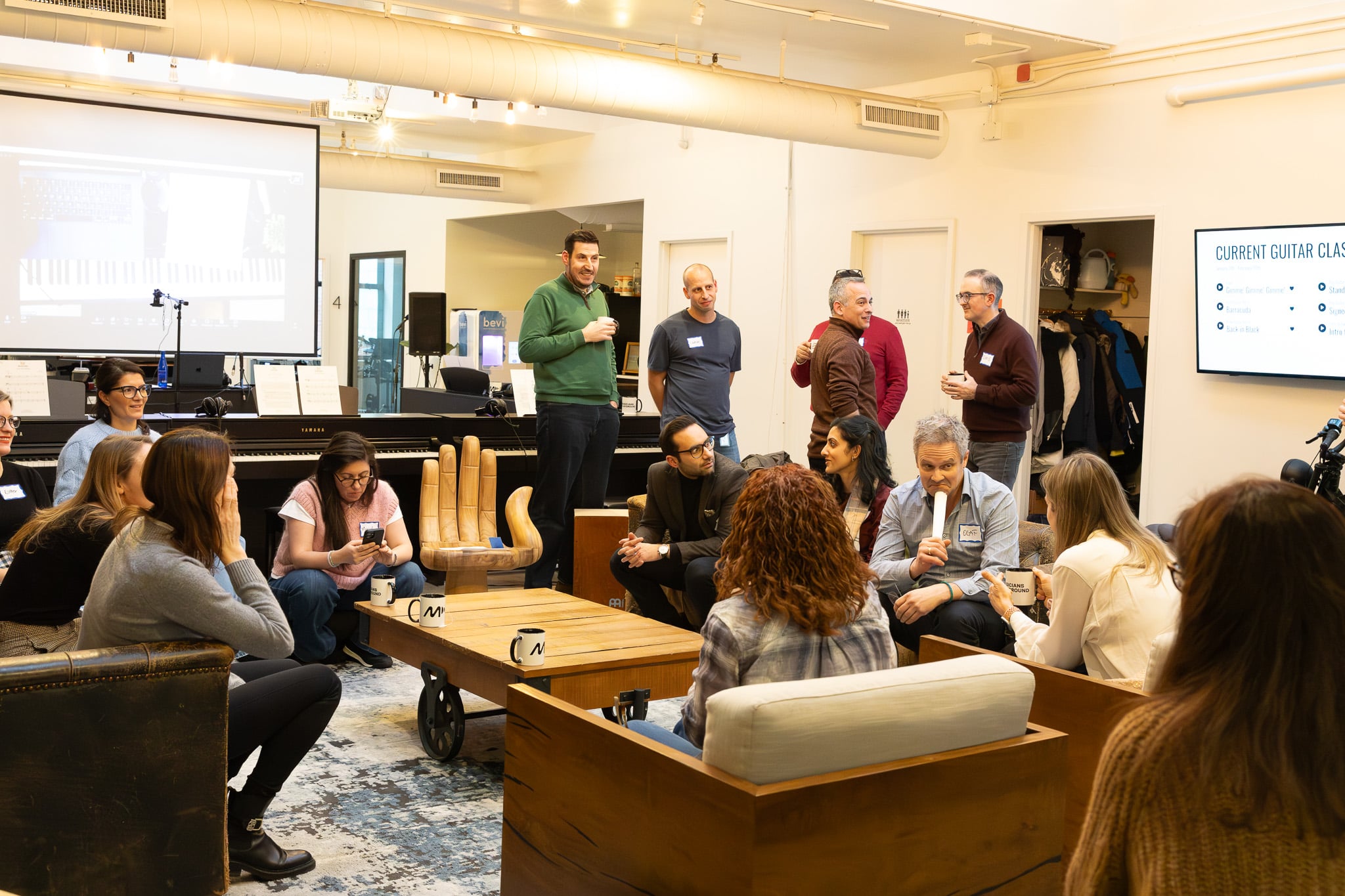
Music-based team building creates psychological safety through a mechanism that other team building activities rarely access: shared vulnerability. When a team of corporate professionals picks up instruments for the first time and tries to play a song together, every person is simultaneously out of their comfort zone. The CEO struggles with guitar chords just like the new hire. The project manager who runs flawless meetings stumbles through her first vocal run.
This shared experience of being a beginner, together, in a supportive environment, accelerates trust formation dramatically. Research on vulnerability in groups shows that when people see their leaders and peers being openly imperfect, it gives everyone permission to take risks, ask questions, and admit mistakes. These are exactly the behaviors that define psychologically safe teams.
At Musicians Playground, our working Boston musicians are specifically trained to create this environment. They normalize the struggle, celebrate small wins, and ensure that every participant feels supported rather than judged. The result is that teams experience more genuine vulnerability in two hours of music-making than in months of office interactions.
Active Listening: The Skill That Transfers
Playing music together requires a particular kind of listening that is rare in most professional settings. When you’re part of a band, you can’t just wait for your turn. You must constantly track what everyone else is doing and adjust your own playing in real time. Is the drummer speeding up? You adapt. Is the vocalist struggling with a transition? You simplify your part to support them. Is the overall sound too loud? You pull back.
This is not passive listening. It’s active, responsive, and requires splitting your attention between your own performance and the group’s collective output. Organizational behavior researchers have noted that this kind of “ensemble listening”, attending to multiple inputs simultaneously and making real-time adjustments, is exactly what effective collaboration requires in the workplace.
Consider a cross-functional project meeting. The most effective participants don’t just present their own updates. They listen to how other departments’ work affects theirs, identify dependencies and conflicts, and adjust their approach accordingly. This is ensemble listening, and practicing it in a musical context makes it more natural in a professional one.
The Flow State: Peak Team Performance
When a band is truly locked in, when everyone is listening, responding, and creating together, the experience enters what psychologist Mihaly Csikszentmihalyi called “flow.” Flow is the state of complete absorption in an activity where time seems to disappear and performance peaks. Research shows that group flow, experienced simultaneously by multiple people, creates some of the strongest social bonds humans can form.
Music is one of the most reliable pathways to group flow. The combination of real-time coordination, creative expression, and immediate feedback (you can hear whether the band sounds good) creates the conditions for flow more consistently than almost any other team activity. Escape rooms can produce individual flow in puzzle-solving, but the fragmented nature of the tasks makes group flow less likely. Cooking classes involve parallel work rather than synchronized collaboration, so group flow is rare.
When a team of corporate professionals experiences group flow during a Battle of the Bands performance, they’re accessing a shared psychological state that most teams never reach in years of working together. That experience becomes a reference point, a proof of concept that this team can achieve something extraordinary when everyone is fully engaged and working in sync.
Long-Term Impact: Why the Video Matters
Most team building activities produce memories that fade within weeks. Music-based team building produces something tangible: a performance video. Research on memory and social identity shows that shared artifacts, photos, videos, stories, reinforce group identity and maintain social bonds over time. When a team watches their Battle of the Bands performance video during a meeting or shares it in a Slack channel, they’re reactivating the social bonds formed during the event.
This is why musicians describe their bandmates as some of their closest relationships. The act of creating something together, combined with a shared record of that creation, builds an identity that persists. Programs like BAND+ at Musicians Playground, which takes this concept even further with a 12-week band experience culminating in a public performance, demonstrate just how powerful the music-and-teamwork connection can be over an extended period.
Applying the Science to Your Team
The research is clear: music-based team building works because it activates the specific neurological and psychological mechanisms that build trust, cooperation, and team identity. Synchrony triggers mirror neuron activation and empathy. Shared vulnerability accelerates trust. Active listening develops collaboration skills. And group flow creates peak bonding experiences that other activities simply can’t match.
If you’re evaluating team building options for your company, the science suggests that music-based experiences offer the strongest return on your investment in team development. For a side-by-side comparison with another popular option, see our article on music team building vs. escape rooms. For more ideas that go beyond the ordinary, explore our guide to unique team building activities that actually improve performance.
At Musicians Playground in Downtown Boston, we’ve built our Battle of the Bands corporate events on these scientific principles. Our working Boston musicians create the conditions for synchrony, vulnerability, and flow, turning teams of beginners into performing bands in just two hours. Book a free consultation to learn how music can transform your team.